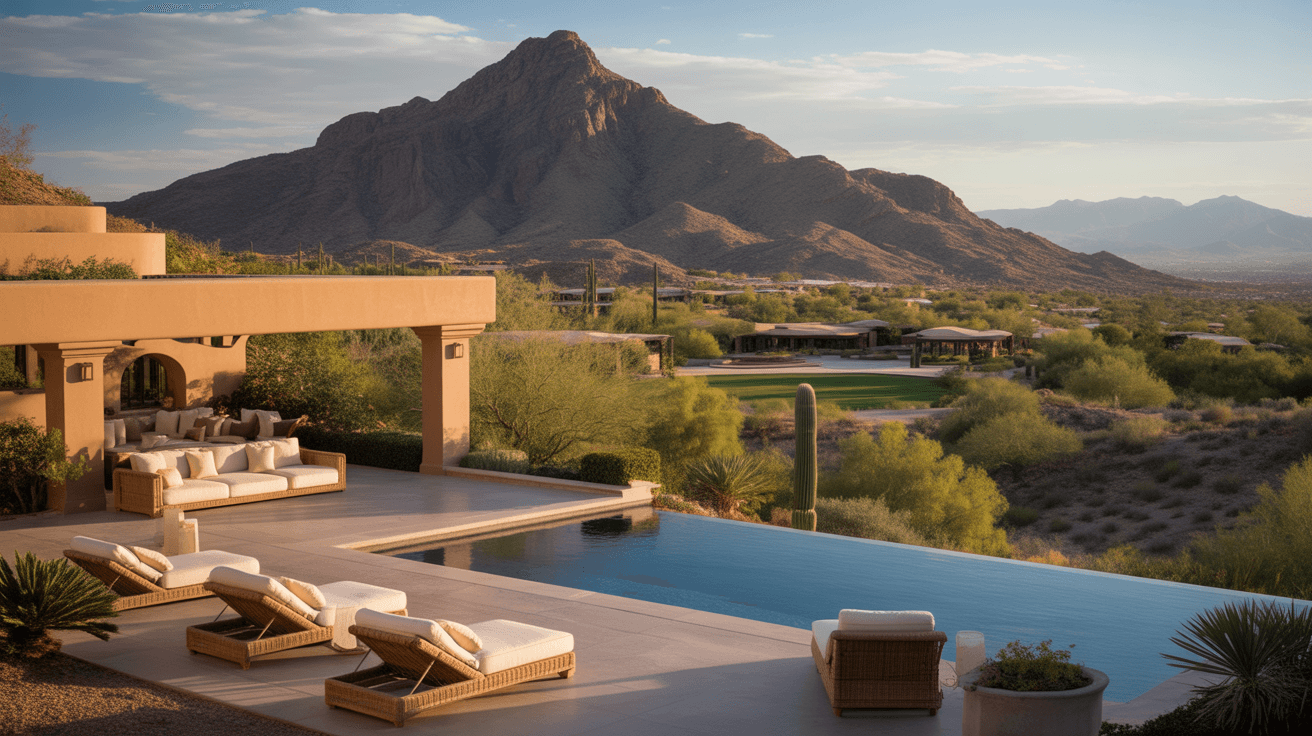
Your Guide to Paradise Valley
Your guide to Paradise Valley, Arizona — the most exclusive community in the Phoenix metro. With a median home price above $3.5 million and more five-star resorts per square mile than anywhere else in Arizona.
What Is It Like to Live in Paradise Valley?
Paradise Valley is the Phoenix metro's ultra-luxury enclave — a small, incorporated town of roughly 14,500 residents nestled between Phoenix and Scottsdale at the base of Camelback Mountain and Mummy Mountain. With a median home sale price that has surpassed $3.5 million and a record-setting $32.4 million sale in 2025, it is one of the most expensive residential communities in the American West. The town has no commercial zoning, no traffic lights, and a deliberate commitment to preserving its residential character.
What makes Paradise Valley exceptional is the combination of natural beauty, resort infrastructure, and radical exclusivity. Camelback Mountain defines the skyline and provides world-class hiking steps from home. The town has more five-star resorts per square mile than any other place in Arizona — Sanctuary on Camelback Mountain, The Hermosa Inn, the Omni Montelucia, Mountain Shadows, and the JW Marriott Camelback Inn are all within town limits. Dining is resort-caliber. Schools are in the highly-rated Scottsdale Unified district. The median household income exceeds $236,000, and nearly a third of residents are 65 or older — reflecting the mix of successful entrepreneurs, corporate executives, and affluent retirees who call Paradise Valley home.
Who Lives in Paradise Valley
Paradise Valley's population of roughly 14,500 is among the most affluent in the Southwest. The median household income exceeds $236,000, and many residents are significantly above that figure. The town is nearly 79% White, with smaller Hispanic (10%) and Asian (5%) communities. The median age is 55 — substantially older than the metro average. About 31% of residents are 65 or older. Buyers are predominantly entrepreneurs, corporate executives, and retirees relocating from high-cost markets like Los Angeles, San Francisco, and Chicago.
Paradise Valley is a community of high-net-worth individuals who value privacy, mountain views, and resort-caliber living. Many residents are semi-retired or manage businesses remotely, drawn by Arizona's low taxes and the town's unique combination of natural beauty and world-class amenities.
Cost of Living in Paradise Valley
Paradise Valley is in a category of its own. The median home sale price exceeded $3.5 million in 2025, with the 85253 zip code ranked among the top 25 most expensive in the United States. Roughly half of active inventory is listed at $5 million or more, and the ultra-luxury segment ($10M+) has its own active market. Move-in-ready, architecturally significant homes command premiums — less polished listings linger. Property taxes are higher than the metro average given assessed values, but Arizona's relatively low tax rate softens the blow. There are no state taxes on Social Security income, and the flat 2.5% income tax rate is a major draw for high earners. Daily living costs (groceries, dining, services) are comparable to Scottsdale — elevated but not dramatically so.
Fine Dining & Resort Restaurants
Paradise Valley's dining scene is anchored by its world-class resorts, each home to restaurants that rank among the best in the Phoenix metro. This is where Scottsdale's celebrated food culture overlaps with a residential community that expects excellence.
Elements at Sanctuary
Modern American / Asian FusionFarm-fresh cuisine by Food Network chef Beau MacMillan with panoramic Camelback Mountain views.
Lon's at The Hermosa Inn
Arizona TerroirRomantic 1930s-era desert hideaway with pecan-grilled filet mignon and chile-rubbed pork belly.
El Chorro
Southwest Fine DiningIconic Arizona landmark at the base of Camelback and Mummy Mountains, famous for sticky buns and seasonal dishes.
Prado at Omni Montelucia
Spanish-InspiredAndalusian villa ambiance with house-made pappardelle, wild mushrooms, and heirloom tomato burrata.
Hearth '61 at Mountain Shadows
Modern AmericanCasual elegance with creative American classics and sweeping Camelback views.
Outdoor Living & Recreation
Paradise Valley's outdoor lifestyle is defined by Camelback Mountain — the Valley's most iconic natural landmark, which rises directly from the town's eastern edge. The Echo Canyon and Cholla Trail routes draw hikers year-round (though summer climbs are dangerous and discouraged). Mummy Mountain offers quieter, less crowded trails with equally stunning views. The town itself is lush by desert standards — mature landscaping, wide setbacks, and mountain-view lots create a sense of space that is rare in the metro. Resort guests and residents alike use the spa, pool, and fitness facilities at the five-star properties. Championship golf is minutes away in Scottsdale and at courses like Mountain Shadows' short course. The Indian Bend Wash Greenbelt connects through to Scottsdale's extensive path system for cycling and running.
Who Is Paradise Valley Best For?
Paradise Valley serves a narrow but specific demographic — people who want the finest residential experience in the Phoenix metro, full stop.
Paradise Valley FAQs
Common questions about living in Paradise Valley, Arizona.
Neither. Paradise Valley is an independent incorporated town with its own government, police force, and zoning. It is geographically surrounded by Phoenix and Scottsdale, and residents use Scottsdale schools and addresses. But it is a distinct municipality with its own identity — specifically, a commitment to remaining exclusively residential.
The town has intentionally maintained a no-commercial-zoning policy since its incorporation in 1961. Resorts and their restaurants are the exception — they predate or were grandfathered into the zoning. Residents shop and dine in neighboring Scottsdale and Phoenix. This deliberate absence of commercial development is a core part of the town's appeal.
As of 2025, the entry point for a single-family home in Paradise Valley is roughly $1.5-$2 million for a smaller or older property. The median sale price exceeds $3.5 million. Architecturally significant or newly built estates on premium lots command $5-$15 million or more. The record sale in 2025 was $32.4 million.
Paradise Valley children primarily attend Scottsdale Unified School District schools, which are among the highest-rated in Arizona. There are also several elite private schools in the surrounding area, including Scottsdale Preparatory Academy, Phoenix Country Day School, and All Saints Episcopal Day School.
The buyer profile is predominantly entrepreneurs, corporate executives, and affluent retirees, many relocating from Los Angeles, San Francisco, and Chicago. Arizona's low tax environment (flat 2.5% income tax, no state Social Security tax) is a major pull. The town continues to attract high-net-worth individuals who want desert luxury with proximity to Scottsdale's amenities.
Local Favorites
Popular spots in the neighborhood
Get the inside scoop on Paradise Valley
Join the waitlist for early access to local insights, neighborhood guides, and AI-powered discovery.
Share a Local Tip
Paradise Valley