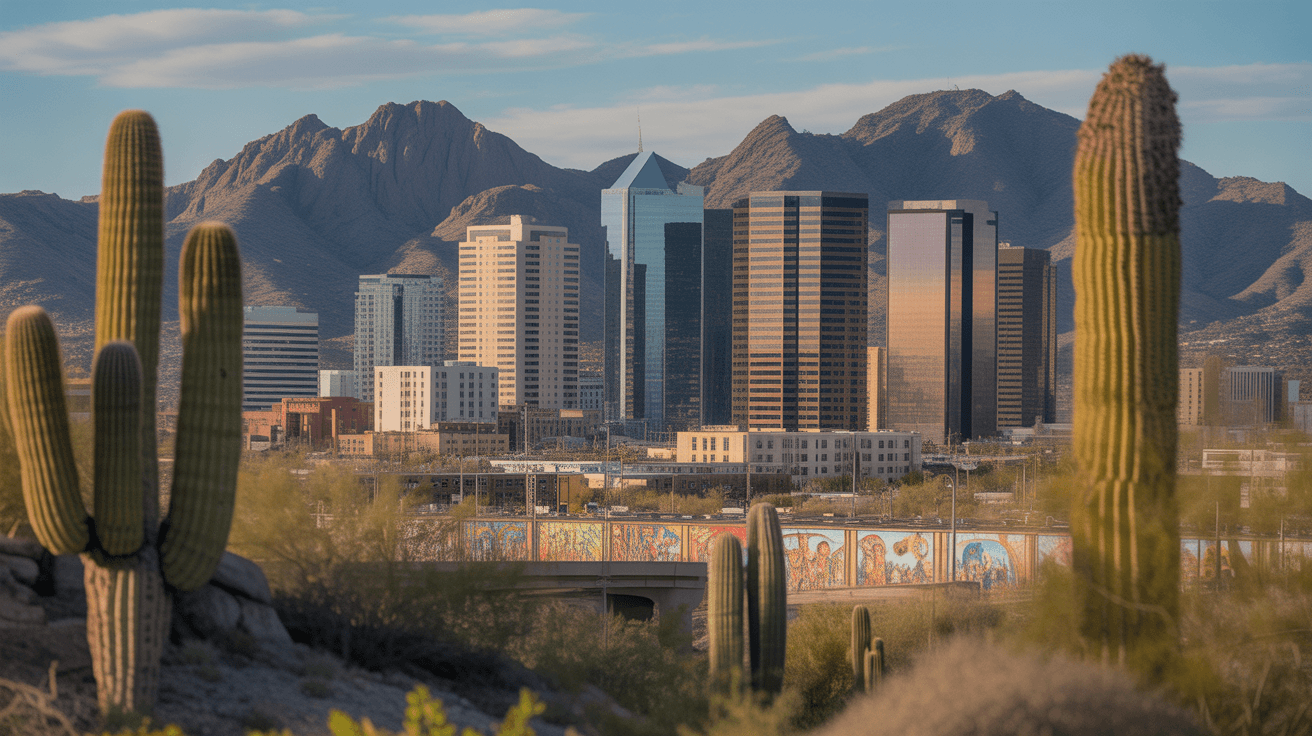
Your Guide to Phoenix
Your guide to the city of Phoenix — the 5th largest city in the U.S. From the urban revival of Roosevelt Row to Camelback Mountain trails and South Mountain vistas.
What Is It Like to Live in Phoenix?
Phoenix is the 5th largest city in the United States by population (~1.65 million within city limits) and the anchor of the broader Valley of the Sun metro. But the city itself has a character distinct from its suburban neighbors. Phoenix proper encompasses a vast geographic area — over 500 square miles — and contains wildly different neighborhoods within its borders. The urban core around Roosevelt Row and downtown has experienced a genuine renaissance, with gallery walks, craft breweries, and mid-rise condos transforming what was once written off as a car-only sprawl city.
Phoenix is a city of contrasts. It has both the millennial energy of a downtown revival and the quiet sprawl of master-planned neighborhoods 30 miles from the center. Camelback Mountain and South Mountain Preserve — one of the largest municipal parks in the country — give the city serious outdoor credentials despite the desert heat. The food scene has grown enormously, from Mexican food that rivals any city in the Southwest to a wave of chef-driven restaurants along the Camelback Corridor. Summers are the defining challenge: June through September is genuinely brutal, with 110°F+ days common. But the other eight months offer some of the best weather in the country.
Who Lives in Phoenix
Phoenix's population is notably diverse. The city is roughly 42% Hispanic or Latino, reflecting deep historical ties to Mexican and Mexican-American communities, particularly in South Phoenix and the west side. Downtown and the central city attract young professionals, artists, and ASU-adjacent workers. North Phoenix draws a mix of families and retirees. Ahwatukee and the Foothills neighborhoods have a more suburban family feel.
The city is getting younger downtown as the urban core gains momentum. The mix ranges from artists in Roosevelt Row to families in Ahwatukee to retirees in North Phoenix — all connected by a shared appreciation for sunshine and the desert landscape.
Cost of Living in Phoenix
Phoenix sits in the middle of the Valley's cost spectrum. It's less expensive than Scottsdale or Paradise Valley but generally more than the far West Valley communities like Surprise or Buckeye. The city's enormous geographic range means prices vary wildly by neighborhood — Arcadia and the Camelback Corridor command $650K+ medians, while Maryvale and South Phoenix offer entry points under $350K. The overall city median is around $425,000, with average one-bedroom rents in the $1,350–$1,650 range depending on location.
Food & Dining in Phoenix
Phoenix's food scene has matured significantly in the past decade. The city's Mexican food is legitimately world-class — from Sonoran hot dogs at street stands to fine-dining Mexican at Bacanora. The craft brewery scene has exploded, centered in downtown, Roosevelt Row, and the Grand Avenue corridor.
Camelback Corridor
Fine Dining & Chef-DrivenRestaurant hub with upscale American, Italian, and farm-to-table options along Camelback Road.
Roosevelt Row / Grand Ave
Arts District DiningIndependent cafes, breweries, and small-plate spots near galleries and studios.
South Phoenix Taquerias
Authentic MexicanSonoran hot dogs, birria, street tacos, and family-run panaderias — some of the best in the state.
Melrose District (7th Ave)
Eclectic & LGBTQ-FriendlyBrunch spots, wine bars, and neighborhood restaurants along the 7th Avenue corridor.
Uptown / Central Ave
Casual to UpscaleDiverse options from ramen to steakhouses along the Central Avenue corridor.
Parks & Outdoors
Phoenix has more mountainous desert parkland within its city limits than almost any major city in the U.S. South Mountain Park and Preserve is one of the largest municipal parks in the country at over 16,000 acres, offering extensive hiking and mountain biking trails. Camelback Mountain — the Valley's iconic summit — draws hikers year-round (though summer climbs are dangerous and discouraged). Papago Park provides easier terrain with red-rock buttes and the Desert Botanical Garden. The canal trail system offers flat, paved paths through the city for running and cycling.
Getting Around Phoenix
Phoenix is a car city, but transit options are growing. The Valley Metro light rail runs through the central city connecting 19th Avenue, downtown, the airport area, and into Tempe/Mesa.
Who Is Phoenix Best For?
Phoenix proper offers the Valley's most urban living, with neighborhood variety from gritty arts districts to mountain-view luxury.
Phoenix FAQs
Common questions about living in Phoenix proper.
Arcadia is beloved for its tree-lined streets, mid-century homes, and proximity to Camelback Mountain. Downtown/Roosevelt Row attracts young urbanites. The Camelback Corridor offers walkable upscale living. Ahwatukee provides suburban family living on the south side. North Phoenix (Deer Valley area) offers newer homes and good schools at moderate prices.
Scottsdale is an independent city east of Phoenix, known for luxury resorts, upscale shopping, and higher price points. Phoenix proper is larger, more diverse, more affordable on average, and has a grittier urban core. They share a border and many residents cross between them daily, but they have distinct identities.
Downtown has transformed dramatically. Roosevelt Row is a legitimate arts district with galleries, restaurants, and breweries. New apartments and condos have brought thousands of residents. The light rail connects downtown to Tempe/ASU. It's walkable, vibrant, and the closest thing the Valley has to traditional urban living.
Banner Health is the largest private employer in Arizona, headquartered in Phoenix. Other major employers include Amazon (logistics), Wells Fargo, Freeport-McMoRan (mining HQ), Grand Canyon University, and the City of Phoenix government. Many semiconductor and defense workers commute from Phoenix to Chandler and Tempe.
Safety varies by neighborhood, as in any large city. Arcadia, Ahwatukee, North Phoenix, and the Camelback Corridor are generally safe with low crime. Some areas of South and West Phoenix have higher crime rates. Overall, Phoenix is comparable to other large Sun Belt cities. Downtown investment has improved urban core safety.
Neighborhoods
Explore the diverse neighborhoods that make Phoenix unique.
Ahwatukee
Your guide to Ahwatukee Foothills — a family-friendly suburban enclave tucked south of South Mountain with top-rated schools, hiking trails, and a small-town feel inside Phoenix city limits.
ExploreArcadia
FamilyDiscover Arcadia — citrus-lined streets, mid-century charm, and top schools nestled at the base of Camelback Mountain. Your AI-powered guide to one of Phoenix's most beloved family neighborhoods as of 2026.
ExploreCamelback East
Your guide to Camelback East — Phoenix's lush, upscale village at the foot of Camelback Mountain with the Arcadia neighborhood, top dining, and some of the best hiking in the Valley.
ExploreDowntown Phoenix
Your guide to Downtown Phoenix — Roosevelt Row galleries, light rail living, craft breweries, and an urban core experiencing genuine revival in the heart of the Valley.
ExploreEncanto-Palmcroft
Your guide to Encanto-Palmcroft — Phoenix's most beloved historic district with Spanish Colonial homes, palm-lined streets, and Encanto Park at its center.
ExploreMaryvale
Your guide to Maryvale — Phoenix's most populous village, an affordable West Phoenix neighborhood with deep Hispanic roots, legendary Mexican food, and serious revitalization momentum.
ExploreNorth Phoenix
Your guide to North Phoenix — the Deer Valley and Happy Valley corridor with newer homes, strong schools, family-friendly suburbs, and some of the lowest crime rates in the city.
ExploreGet the inside scoop on Phoenix
Join the waitlist for early access to local insights, neighborhood guides, and AI-powered discovery.
Share a Local Tip
Phoenix